Which Ganesha murti is best for home mandir — marble, brass or bronze?
Jaipur Murti Editorial
Editorial Team
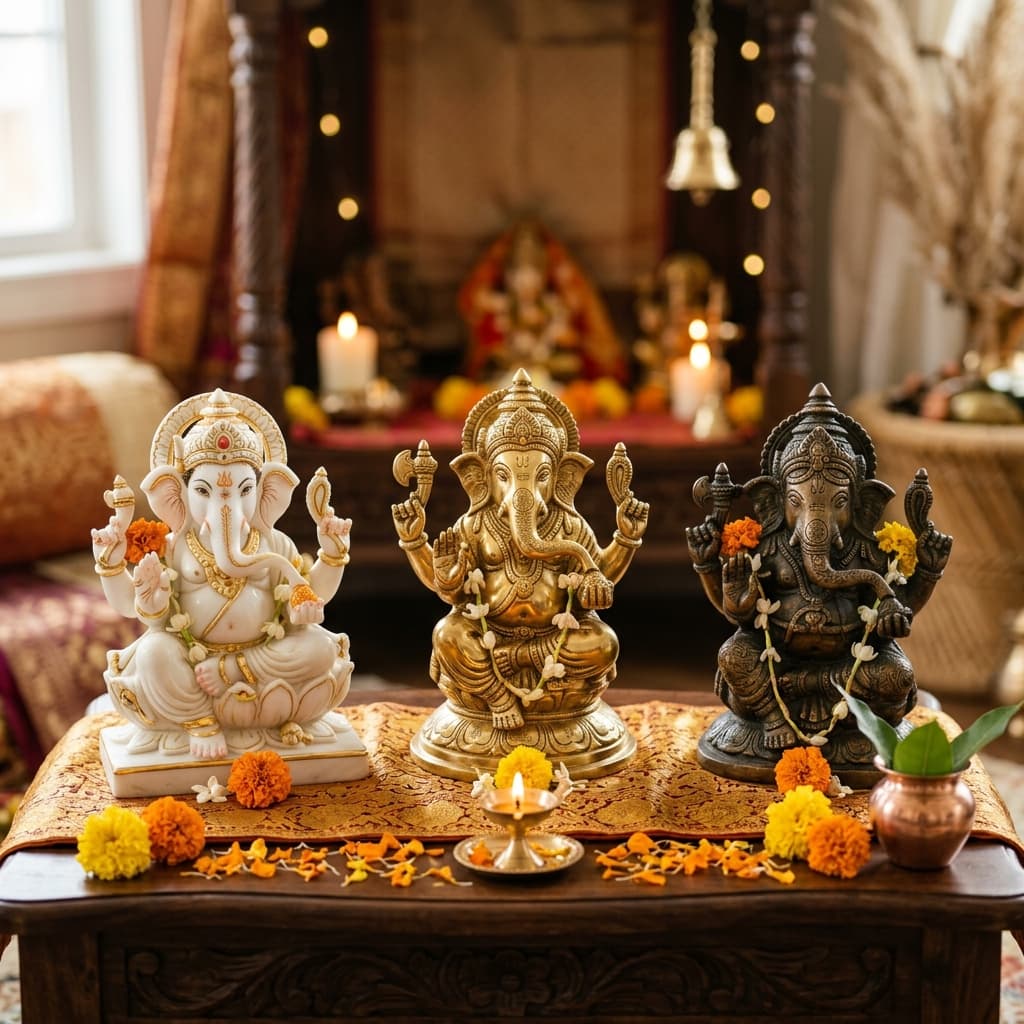
The Divine Dilemma: Marble, Brass, or Bronze?
Lord Ganesha, the remover of obstacles and the harbinger of new beginnings, is the first deity worshipped in any Hindu ritual. When it comes to bringing Ganpati into your home mandir, one of the most common questions we receive at Jaipur Murti is: "Which material is best?"
While the spiritual essence of the Lord remains the same regardless of the medium, different materials offer distinct vibrations, maintenance requirements, and aesthetic appeal. Here is a comprehensive guide to help you choose the perfect material for your devotion.
1. Marble: The Symbol of Purity (Sattva)
Marble, especially the pristine White marble from Rajasthan, is the most popular choice for home mandirs. In Vedic tradition, white represents Sattva—purity, peace, and divine knowledge.
- Aesthetics: Marble murtis radiate a soft, ethereal glow. They are often hand-painted with vibrant colors and 24K gold leaf, making them visually stunning.
- Vibration: Marble is believed to absorb the spiritual energy of prayers and mantras effectively, making it ideal for a focused puja space.
- Maintenance: Requires gentle cleaning with a soft cloth. It is susceptible to stains from turmeric or sindoor if not sealed correctly, so careful handling during abhishekam is necessary.
2. Brass: The Radiance of the Sun
Brass is an alloy of copper and zinc, and its golden hue is associated with the Sun and spiritual enlightenment. It has been used for centuries in South Indian temple traditions.
- Aesthetics: Brass murtis often feature incredibly fine detailing. They bring a warm, radiant energy to the room and shine beautifully under the light of a diya.
- Durability: Brass is highly durable and can last for generations. It is perfect for families who perform daily abhishekam (ritual bathing) with milk, honey, and water.
- Maintenance: Over time, brass develops a natural dark patina. While some prefer this antique look, others choose to polish it periodically to maintain its golden luster.
3. Bronze: The Antique Majesty
Bronze (Panchaloha) is a sacred five-metal alloy traditionally used for Chola-style sculptures. It is the material of choice for serious collectors and those seeking a museum-quality feel.
- Aesthetics: Bronze murtis usually have a deeper, more profound character. They feel heavy, substantial, and carry a sense of ancient history.
- Spiritual Significance: The five metals represent the five elements (Earth, Water, Fire, Air, and Ether), creating a balanced spiritual conductor.
- Maintenance: Very low maintenance. The natural oxidation (patina) is considered part of the murti's beauty and spiritual journey.
The Final Verdict
Ultimately, the "best" material is the one that moves your heart. If you seek purity and a bright, serene mandir, go for Marble. If you want durability and a traditional golden glow, choose Brass. If you are looking for a sacred heirloom with deep historical roots, Bronze is your answer.
Explore our curated collection of handcrafted Ganesha murtis to find the one that speaks to your soul.